
 Image 1 of 1
Instructors: Aurelia Pabot and Tracey Barry Hunt
Dates: Tuesdays, 10/20, 10/27, 11/3, 11/10
Time: 4-7pm
Location: Zoom
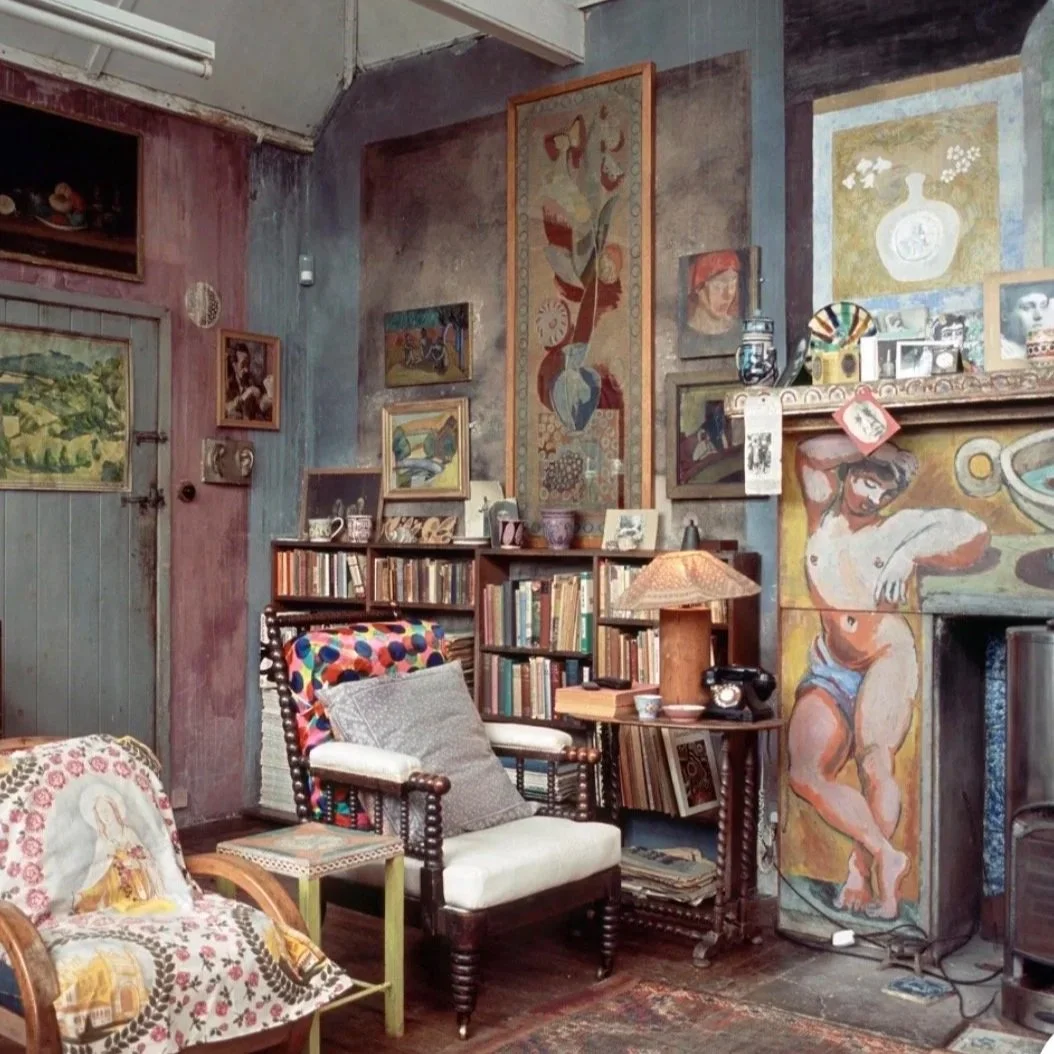
For four decades during the twentieth century, a group of artists, intellectuals, writers, and thinkers in London, known most commonly as The Bloomsbury Group, challenged the normative Victorian society they lived in by reimagining British culture. With their art, they brought forth Modernism and created a dialogue between Britain and Europe's art and literary worlds. In their personal lives, the Bloomsbury Group lived defiantly and authentically, focusing on gender equality, gender fluidity, as well as redefining domesticity and the confines of traditional marriages. They were described as having lived in squares, painted in circles, and loved in triangles.
This course follows key members of the Bloomsbury Group—Virginia Woolf, Vanessa Bell, Clive Bell, Roger Fry, Lytton Strachey, Dora Carrington—and those closest to them, with the aim of understanding and exploring how their art reshaped Victorian culture and how their legacy is still extremely relevant today. Some questions we will be considering: How did the Bloomsbury Group break 'traditional rules'? Why and how does their work remain so important now and what is their legacy today? And what did they try to accomplish by seeing life as art and art as life? Over the course of 4 sessions we will explore the rich and revolutionary artistry the Bloomsbury Group introduced to Britain, and subsequently, the world.
Instructors: Aurelia Pabot and Tracey Barry Hunt
Dates: Tuesdays, 10/20, 10/27, 11/3, 11/10
Time: 4-7pm
Location: Zoom
For four decades during the twentieth century, a group of artists, intellectuals, writers, and thinkers in London, known most commonly as The Bloomsbury Group, challenged the normative Victorian society they lived in by reimagining British culture. With their art, they brought forth Modernism and created a dialogue between Britain and Europe's art and literary worlds. In their personal lives, the Bloomsbury Group lived defiantly and authentically, focusing on gender equality, gender fluidity, as well as redefining domesticity and the confines of traditional marriages. They were described as having lived in squares, painted in circles, and loved in triangles.
This course follows key members of the Bloomsbury Group—Virginia Woolf, Vanessa Bell, Clive Bell, Roger Fry, Lytton Strachey, Dora Carrington—and those closest to them, with the aim of understanding and exploring how their art reshaped Victorian culture and how their legacy is still extremely relevant today. Some questions we will be considering: How did the Bloomsbury Group break 'traditional rules'? Why and how does their work remain so important now and what is their legacy today? And what did they try to accomplish by seeing life as art and art as life? Over the course of 4 sessions we will explore the rich and revolutionary artistry the Bloomsbury Group introduced to Britain, and subsequently, the world.